Frank asked questions then, the way a good investigator always did, not the questions a friend would ask but the questions a case would need. Had James kept the original footage. Yes, James said, and copies offsite. Had he kept the note. Yes, in a bag in his safe. Had he kept the fine and the lien threat and the HOA records. Yes, Angela Price had them all. Had anyone else been threatened. Yes, his daughter Laura had been followed home, and his tires had been cut, and the camera had caught a figure beside his truck in the dark. Frank wrote it all down, and James could hear the scratch of the pen. Then Frank asked the question that mattered most, whether James had told anyone else about the money, and James said only Angela Price and Sheriff Dan Whitaker knew the full number, and Frank nodded on the other end of the line as if he had expected that answer. Good, he said. Keep it that way. The fewer people who knew, the safer the case would be.
Then Frank's tone changed, and James heard the friend underneath the agent. He told James to be careful, and he did not say it lightly. Men who had already broken into a house at night and cut tires in the dark were not men who would stop because a lawyer sent a letter. They were men who had convinced themselves they were right, and men who had convinced themselves they were right were the most dangerous kind, because they did not think they were breaking the law at all. Frank said the five men were probably frightened now, and frightened men did desperate things, especially if they understood that the money was missing and that someone was looking for it. He told James not to confront them alone, not to go to their houses, not to try to settle it man to man, no matter how much his pride wanted him to. He had known James for forty years, Frank said, and he knew that James Harris did not frighten easily, but this was not the time to prove it. This was the time to let the record do the work.
James thanked him, and they talked for a few more minutes about old cases, about men they had chased together, about the long nights in cars outside buildings where armed men waited inside. It was the first time in days that James had laughed, a short, real laugh at a story Frank told about a fugitive who had hidden in a closet with his own wanted poster. Then the talk turned serious again, and Frank told James what would happen next. He would run the names quietly, check whether any of the five men had a record, check whether the homeowners association had drawn federal attention before, and he would talk to his supervisor about opening a preliminary inquiry. He warned James that the process would be slow, that federal cases were built brick by brick, and that there would be days when it felt like nothing was happening. But he also told him that the footage James had, the note, the tires, and the money trail together made a strong start, and that a strong start mattered more than a fast one.
After he hung up, James sat in his study for a long time without moving, the phone still warm in his hand. The house was quiet around him, the sunlight coming through the window in long, steady bars. He thought about Eleanor, about the way she had always told him to trust the process, to let the law work even when it worked slowly. He thought about Laura and her husband Tom and their children, and about the car that had followed Laura home, and he felt the protective anger rise in him again, the same anger he had felt when he first saw the flowers crushed in the yard. He pushed it down, not because it was wrong but because it was useless, and he opened his notebook instead. He wrote down the time of the call, the name Frank Calloway, the words impersonation and conspiracy and wire fraud and mail fraud, and the warning that the men might be desperate. He wrote it all in his neat handwriting, the same handwriting he had used for forty years, and when he was done he closed the notebook and put it in the safe with the rest of the evidence.
Angela Price called that afternoon, and James told her about the conversation. She listened carefully, asking him to repeat Frank's exact words about the federal charges, and when he had finished she was quiet for a moment, the way Frank had been quiet. Then she said that a federal inquiry changed the shape of the case, that it gave them leverage they had not had before, and that it meant the HOA could no longer treat the dispute as a private argument about a mailbox. She told James to keep documenting everything, to keep his distance from Roy Beckett and the others, and to let her handle any contact with Veronica Lane and the board. She said she would prepare a formal letter to the association, putting them on notice that any further contact with James would be treated as harassment and preserved for the record. James agreed, and he told her about Frank's warning, and Angela said the same thing Frank had said, that desperate men were dangerous men, and that James should make sure Walter Briggs knew to call the sheriff if he saw anything strange around the house.
That night James and Walter sat on the porch again, and James told his old neighbor about the call in general terms, without sharing details that belonged to the case. He told Walter that an old friend in the FBI was looking at the matter, and Walter nodded slowly, as if that was what he had been waiting to hear. He said it was about time someone with real authority took a look at what was happening in Pinewood Estates, and that the men who had come at night had been acting like they owned the place for too long. They sat together until the streetlights came on, watching the cars pass, watching the houses settle into the evening, and James felt the first small loosening of the knot that had been in his chest since the night of the break-in. He was not alone in this anymore. He had his daughter, his lawyer, his sheriff, his neighbor, and now an old friend in the FBI who knew exactly what the five men had done and exactly what it could cost them.
Before bed, James walked the house again, checking the locks and the cameras, the same careful circuit he had made every night since the break-in. He stopped in the doorway of the bedroom he had shared with Eleanor, looked at the empty side of the bed, and thought about how much she would have hated the fear that had come into their home. She had never been afraid of a fight, but she had hated cruelty, and she had hated bullies most of all. He promised her quietly, in the dark, that he would finish this the right way, without firing a shot if he could help it, without becoming the kind of man who solved problems with a gun in his own living room. Then he went to his own bed, set his phone beside him, and lay down to wait for sleep. Outside, Pinewood Estates was quiet, and somewhere in that quiet, five men were deciding what to do next, and James Harris knew that whatever they decided, the law was now watching them too. He lay awake a while longer, listening to the house, turning Frank's warning over in his mind the way he had once turned over the details of a fugitive file before a morning briefing. Desperate men did not think clearly, and men who had already crossed a line once often told themselves that crossing it again would somehow undo the first crossing. He thought about Roy Beckett most of all, the heavyset man who had stood in his yard with a flashlight in one hand and a short-handled shovel in the other, shouting orders as if volume could make him a chief. Beckett had built his small authority on fear, and fear was a poor foundation when the people he had frightened stopped being afraid and started keeping records instead. James reached for his notebook on the nightstand, wrote down one more line in the dark by the light of his phone, and closed it again, satisfied that the record was complete for the day. Tomorrow there would be more to add, and he would add it, patiently, the way he always had.
Chapter 8 - The Injunction
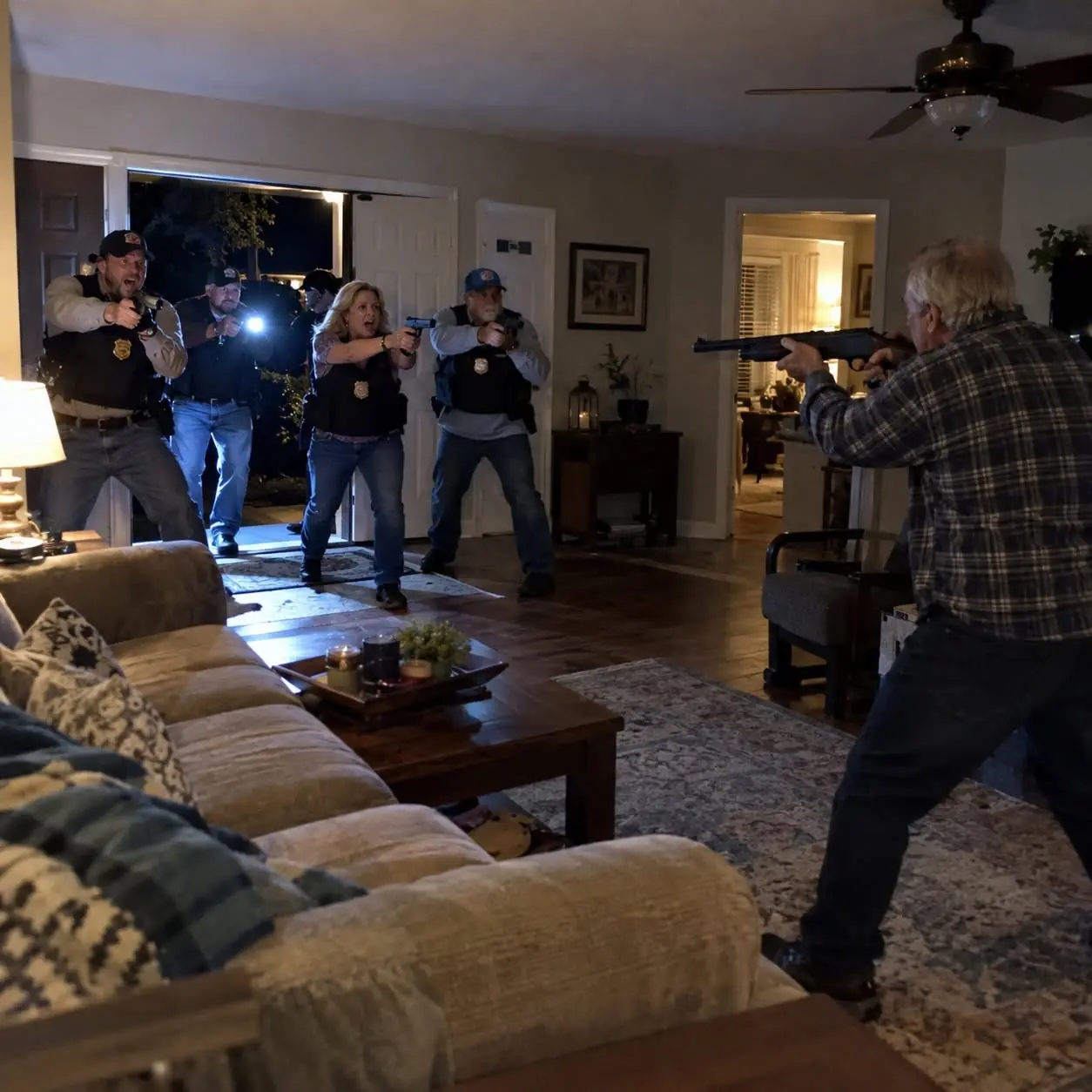
The courthouse in Cedar County smelled of old wood and fresh coffee, and James Harris arrived early, the way he had arrived early for every court appearance in forty years, because a man who was early had time to watch the room and understand it before the room started watching him. Angela Price met him on the steps, her briefcase in one hand and a thick file in the other, her dark suit crisp despite the morning heat, her expression calm in the way that told James she had spent the night preparing and was ready for a fight. She walked him through what would happen inside, speaking quietly and clearly, the way she always did when the stakes were high. She would ask the judge for a temporary restraining order against the Pinewood Estates homeowners association, barring Veronica Lane and the board and their so-called enforcement unit from coming near James, from contacting him, from fining him, and from taking any action to enforce the twelve thousand four hundred dollar fine or the lien threat while the case was pending. She had the footage, the photographs of the tires, the threatening note in its plastic bag, the sheriff's report, and the HOA's own records showing the missing money. She told James to answer only what he was asked, to speak plainly, to look at the judge when he spoke, and to let her handle the rest.
Inside, the courtroom was small and crowded for a morning hearing, the wooden benches filled with neighbors from Pinewood Estates who had come to watch, some because they supported James and some because they supported the association, and all of them whispering in low voices that fell silent when the judge entered. James sat beside Angela at the front table, his hands folded on the wood, his plaid shirt replaced by a clean white shirt and a dark jacket that Eleanor had bought him years before for occasions that mattered. Across the aisle sat Veronica Lane, sixty-one years old, her hair set perfectly, her suit expensive, her face composed into an expression of injured dignity, as if she were the one who had been wronged. Beside her sat a man James had never seen before, a slick lawyer from Atlanta in a suit that cost more than James's truck payment, his smile smooth and practiced, his briefcase shining. James had seen men like him before, men who could make a weak case sound strong by talking fast enough and smiling wide enough, and he settled himself to listen without reacting.
Angela stood first, and her voice filled the room without rising. She laid out the facts in order, the way she had laid them out for James in her office, the break-in at one in the morning, the five men in matching navy shirts, the crowbar and the bolt cutters and the plastic badge, the shouting and the threats, the cameras that had recorded every second of it. She described the tires cut in the dark, the note taped to James's door that read sell and leave, the car that had followed his daughter Laura home from the grocery store. She held up the photographs one by one, letting the judge see the cuts in the rubber, the words on the paper, the faces on the video stills. She spoke about the twelve thousand four hundred dollar fine and the lien threat, and about the hundred and eighty thousand dollars that could not be accounted for in the association's records. She did not raise her voice. She did not need to. The facts were loud enough on their own, and the courtroom grew quieter with every sentence.
When she finished, Veronica Lane's lawyer stood up, smoothing his jacket, smiling at the judge as if they were old friends. He spoke in a warm, reasonable voice, the voice of a man who wanted everyone to believe he was the only calm person in the room. He said this was a simple neighborhood dispute that had been blown out of all proportion, a disagreement about a mailbox and a few fines that had gotten out of hand. He said Veronica Lane was a dedicated volunteer who had given years of her life to Pinewood Estates, and that the association had only ever tried to keep the neighborhood looking its best. He said the five men had gone to James's house that night only to deliver a notice, and that things had gotten confused in the dark, and that James Harris had made the situation worse by confronting them with a shotgun in his living room. He said James was the aggressor, a frightened old man with a gun who had overreacted to a routine visit, and that the association was now afraid of him, not the other way around. He said the restraining order was unnecessary, that it would only make a bad situation worse, and that the judge should let neighbors settle this among themselves.
James felt his jaw tighten, but he kept his hands still on the table, the way Angela had told him to. He had heard lies in courtrooms before, from men far more dangerous than this lawyer, and he knew that the worst thing he could do was react to them. Angela stood again, and her voice was sharp now, not loud but sharp, like a blade. She asked the lawyer, politely, whether a routine visit usually happened at one in the morning, whether it usually involved a crowbar and bolt cutters, whether it usually included shouting threats through a man's door and crushing his late wife's flowers underfoot. She asked whether a routine visit usually ended with tires cut in the dark and a note that said there was no next warning. She asked whether the association's routine visits usually followed a man's daughter home from the grocery store. Each question landed in the quiet room, and the lawyer's smile grew a little thinner with each one. He tried to answer, saying the men had acted on their own, that the board had not authorized a nighttime visit, that Veronica Lane had known nothing about it until the morning after, but Angela was ready for that too, and she held up the association's own minutes, showing the meeting where the enforcement unit had been discussed, and the messages where Veronica Lane had praised their work.
The judge listened to all of it without interrupting, his face giving away nothing, his pen moving across a pad in front of him. He was a man in his sixties, with gray hair and the tired eyes of a man who had heard a thousand neighborhood disputes, and James watched him the way he had watched a hundred judges in his career, looking for the small signs that told him which way the wind was blowing. The judge asked Angela a few short questions about the footage, about the chain of custody, about whether the original files were preserved, and Angela answered each one cleanly, without hesitation. He asked Veronica Lane's lawyer whether the association had any written authorization for the men to enter James's property, and the lawyer hesitated, just for a second, before saying that the authorization had been verbal. The judge wrote something down. He asked Veronica Lane herself whether she had approved the twelve thousand four hundred dollar fine, and she lifted her chin and said she had, that the fine was proper and justified, and the judge wrote something down again.
Then the judge called James to speak. James stood slowly, his knees aching, and walked to the front of the room. He looked at the judge, not at Veronica Lane and not at her lawyer, and he told the truth in plain language, the way he had told it to Sheriff Dan Whitaker and to Frank Calloway. He told the judge about the night the five men came, about the shouting and the blows against his siding, about standing in his living room in his plaid shirt with a shotgun in his hands and no one firing a shot. He told him about his late wife Eleanor, about the flowers she had planted, about the three years he had lived alone in the house they had shared. He told him about the tires and the note and his daughter Laura being followed home, and he told him that he had not come to court looking for revenge, that he had come because a man should be safe in his own home at night, and because a homeowners association should not be able to send men with tools to frighten an old man into selling his house. His voice did not shake. It did not need to. The room was so quiet that James could hear the clock ticking on the wall behind the judge.
When James sat down, the judge was silent for a long time, looking down at his notes, and the whole courtroom seemed to hold its breath. The neighbors in the benches shifted in their seats. Veronica Lane stared straight ahead, her hands clasped tightly in her lap. Her lawyer leaned toward her and whispered something, and she shook her head once, sharply. James felt Angela's hand rest briefly on his arm, a small steady pressure, and he knew she was telling him to wait. Then the judge looked up, cleared his throat, and spoke in a voice that carried to the back of the room without effort. He said he had heard enough, and that the evidence before him was clear. He granted the temporary restraining order. He ordered the Pinewood Estates homeowners association, its president Veronica Lane, its board, and its enforcement unit to stop all enforcement action against James Harris immediately, to make no contact with him or his family, to stay away from his property, and to take no further steps to collect the fine or pursue the lien while the case was before the court. He said any violation would be treated as contempt, and he said it in a tone that left no room for misunderstanding.
A sound went through the courtroom, not a cheer but a release, a long breath let out all at once. James felt his shoulders drop for the first time in days, and he realized how much tension he had been carrying in them. Angela smiled, a small professional smile, and gathered her papers. Veronica Lane stood up stiffly, her face flushed, and walked out of the courtroom without looking at anyone, her lawyer hurrying after her, his smooth smile gone. Outside, on the courthouse steps, the neighbors who had supported James came up to shake his hand, Walter Briggs first among them, gripping James's hand hard and saying that justice had finally shown up in Pinewood Estates. James thanked them all, but he did not celebrate. He had been in courtrooms long enough to know that a temporary order was a beginning, not an ending, and that a woman like Veronica Lane would not accept a judge's order quietly. He told Walter that, and Walter nodded, because Walter understood too.
Angela walked James to his truck, talking as they went, laying out the next steps in her calm, practical way. The order would be served on the association that afternoon. She would file for a permanent injunction next, and she would push for discovery of the full financial records, every receipt and every transfer, until the missing hundred and eighty thousand dollars was explained or someone was held responsible. She warned James that Veronica Lane's lawyer would try to paint him as the aggressor in the press and in the neighborhood, that there would be rumors and whispers, and that the best answer to rumors was the same as it had always been, the record. Keep documenting, she said. Keep your distance. Let the order do its work. James promised he would, and he thanked her, and he meant it. He had hired a lawyer, but what he had found was an ally, and he knew the difference.
That night, James sat on his porch with Walter Briggs, the restraining order folded in his jacket pocket, the house quiet behind him, the street dark and peaceful in front of him. For the first time since the night the five men had come, he allowed himself to believe that the law might actually hold, that a judge's words on paper might be enough to keep the men away. But underneath the relief, underneath the tired satisfaction of a day in court, there was a warning he could not shake, the same warning Frank Calloway had given him on the phone. Men who had already broken the law once, and who had just been told by a judge to stop, did not always stop. Sometimes they got angry. Sometimes they got desperate. And sometimes, James knew from forty years of chasing men like them, they came back in the dark to finish what they had started. He looked out at the quiet street, at the porch lights coming on one by one, and he stayed on the porch a long time after Walter went home, watching, waiting, and remembering that an order on paper was only as strong as the men willing to enforce it.
Chapter 9 - The Second Night
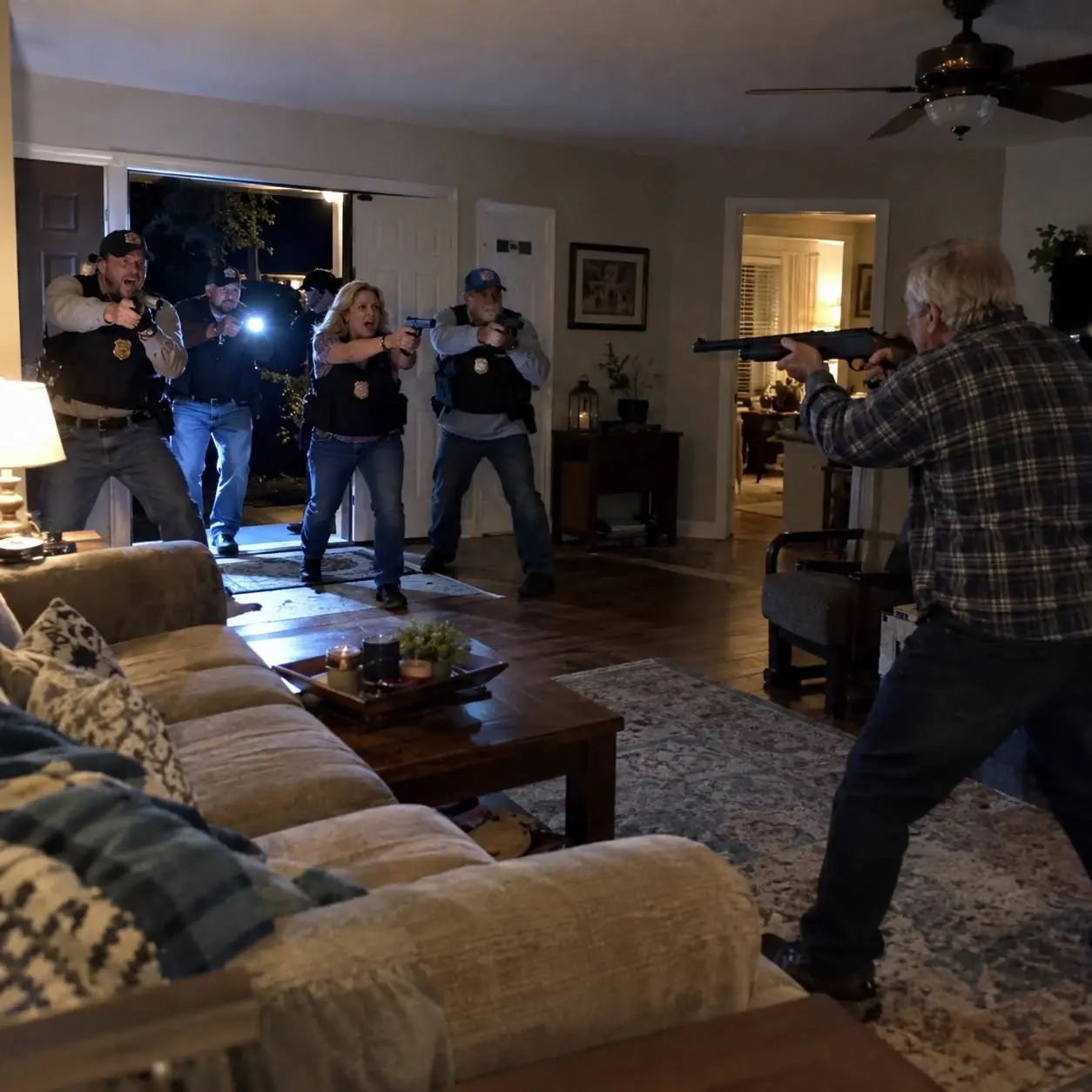
The order did not hold for a week. It held for four days, four quiet days in which James Harris began to believe, against his better judgment, that the men who had terrorized his house might actually obey a judge. The cameras stayed quiet. The street stayed calm. No sedan crawled past his house in the morning. No note appeared on his door. Laura called every evening to say that no one had followed her, and her husband Tom had checked the street before she drove home, and their children were sleeping well again. James tended the flower bed where Eleanor's flowers had been crushed, planting new seedlings in the soft earth, his hands careful in the soil, and Walter Briggs came over most evenings to sit on the porch and talk about nothing important, the way old friends did when the danger had passed. James should have known better. Forty years as a United States Marshal had taught him that quiet after a court order was not peace. It was the pause before the next move.