Walter Briggs came back that afternoon with a toolbox and a new lock for the front door, and the two old men worked together in silence, measuring, drilling, fitting the new hardware into the splintered wood. Walter did not ask many questions, and James did not offer many answers, but the quiet work said everything that needed to be said. Neighbors helping neighbors. Friends standing together. A community remembering what it was supposed to be. When the door was fixed, Walter clapped James on the shoulder and said, You call me if they come back, James. I may be seventy-two, but I can still sit on a porch with a shotgun and keep watch. James smiled for the first time that day, a real smile, and thanked his friend. He knew then that he was not as alone as Veronica Lane wanted him to believe. He had allies. He had evidence. And he had the truth, recorded in high definition, backed up far beyond the reach of anyone in Pinewood Estates.
Three days after the raid, James Harris was sitting at his kitchen table, drinking his morning coffee and reading the newspaper, when the mail carrier brought him an envelope that changed everything again. It was a thick envelope, heavy white paper, with the Pinewood Estates logo at the top and a return address for a law firm in Atlanta he had never heard of. Inside was a letter, and a document, and a number so large that James had to read it twice to believe it.
Twelve thousand four hundred dollars. That was the total the HOA now claimed he owed. Fifty dollars a day for the mailbox, plus late fees, plus administrative fees, plus legal fees, plus a special assessment for enforcement costs, all added together into a single terrifying sum. And at the bottom of the letter, in bold capital letters, was a warning that if the amount was not paid in full within thirty days, the association would file a lien against his property, the first step toward foreclosure. They would take his house. They would take Eleanor’s house. They would take the home he had lived in for twenty-two years, over a mailbox that worked perfectly well.
James set the letter down on the table and stared at it for a long time, his hands steady but his mind racing. He had expected Veronica Lane to fight back. He had expected her to deny responsibility for the raid, to claim Roy Beckett and his men had acted on their own, to try to turn the story around. He had not expected her to double down so quickly, so brazenly, while the five men she had sent were still facing criminal charges, while the whole neighborhood was talking about the raid, while Sheriff Whitaker was still investigating. It was either arrogance or desperation, and James suspected it was both.
He picked up the phone and called his daughter Laura. She answered on the second ring, her voice bright, and then worried when she heard the tone of his voice. Dad, she said, what is wrong? What happened?
James told her about the letter, about the twelve thousand four hundred dollars, about the lien threat, about the thirty days. There was a long silence on the other end of the line, and then Laura said, in a voice that was shaking with anger, I am coming over. I am bringing Tom. Do not sign anything. Do not pay anything. We will figure this out together.
An hour later, Laura and Tom Bennett arrived, Tom carrying a bag of groceries, Laura carrying a folder full of papers she had printed from the internet about HOA law in Georgia. Tom was forty years old, a quiet, steady man who worked as an engineer, the kind of man who fixed things with his hands and thought before he spoke. He sat down at the kitchen table, read the letter carefully, and shook his head.
This is insane, Dad, he said. Twelve thousand dollars for a mailbox? They cannot do this. There has to be a law against this.
There are laws, James said. But laws only help if you have a lawyer who knows how to use them. And I think it is time I hired one.
Laura nodded. She had already been thinking the same thing. She had spent the morning calling around, asking friends, asking coworkers, asking anyone who might know a good lawyer who handled HOA disputes. A friend from school had recommended a woman named Angela Price, a lawyer in Atlanta who specialized in property disputes and homeowners association abuse. Angela had a reputation for being tough, smart, and fearless, the kind of lawyer who did not back down from a fight, even when the other side had more money and more connections. Laura had already left her a message.
Angela Price called back that afternoon. Her voice on the phone was warm but professional, clear and direct, the voice of a woman who was used to being listened to. Mr. Harris, she said, I have heard about your case. I saw the news about the raid. I would like to meet with you, if you are willing. I think I can help, but I need to see all of your documents, every letter, every fine, every notice, everything you have.
James agreed to meet her the next morning at her office in Atlanta. He spent the evening gathering his folder, the one in his desk drawer, the one with every letter from Veronica Lane, every fine, every notice, his log of dates and times, his copies of the certified mail receipts, and the backup logs from his security cameras. He laid it all out on the kitchen table and organized it in chronological order, the way he had organized case files for forty years, neat and complete and impossible to argue with. Laura helped him, making copies of everything, labeling each document, and by midnight, they had a file that told the whole story, from the first mailbox letter to the night of the raid.
The next morning, James drove into Atlanta, his folder on the passenger seat beside him, and walked into Angela Price’s office, a bright, modern space on the tenth floor of a building downtown, with large windows and a view of the city. Angela was in her early forties, tall and confident, with dark hair pulled back and sharp eyes that missed nothing. She shook his hand firmly and offered him coffee, then sat down across from him and listened as he told his story, from the beginning, without interrupting, taking notes as he spoke.
When he finished, she opened his folder and began to read, her eyes moving quickly over the letters, the fines, the notices, pausing only to ask a question here and there. She read for almost an hour, and James sat quietly, watching her, trying to read her face. Finally, she closed the folder and looked up at him, her expression serious.
Mr. Harris, she said, this is one of the worst cases of HOA overreach I have ever seen. A fifty-dollar-a-day fine for a working mailbox is excessive on its face. The failure to give you a hearing is a violation of your rights under the association’s own bylaws. The lien threat, coming three days after a criminal raid by men the HOA president appears to have authorized, looks like retaliation. And the amount, twelve thousand four hundred dollars, is not just unreasonable. It is punitive. It is designed to force you to sell your home, or to scare you into paying money you do not owe.
James nodded. He had suspected as much, but hearing it from a lawyer made it real. What do we do? he asked.
First, Angela said, we do not pay. We do not pay a single dollar. Second, we send a formal response, demanding a hearing, demanding an accounting of every fee, demanding proof that the board followed its own procedures. Third, we preserve all evidence, including your video footage, which is excellent, by the way. I have seen a lot of security video in my career, and yours is unusually good. Clear faces, clear audio, clear timestamps, offsite backup. That is gold. And fourth, we prepare for a fight, because Veronica Lane is not going to back down easily. She has too much invested in this.
That afternoon, back in Pinewood Estates, Veronica Lane was holding a meeting of the HOA board in her living room, and she was not happy. The raid had been a disaster, and she knew it. The neighborhood was talking. The sheriff was investigating. The local newspaper had run a short story about five men arrested for breaking into a retired marshal’s home, and while the story had not named Veronica, everyone in Pinewood Estates knew who had sent them. Carl Whitfield, the treasurer, sat in the corner, nervous and quiet, watching Veronica pace back and forth, her voice rising with every sentence.
This is not my fault, Veronica said, jabbing a finger in the air. Roy Beckett acted on his own. I never told him to break into anyone’s home. I told him to enforce compliance. If he misunderstood, that is his problem, not mine. And James Harris is still in violation. He still owes the fines. He still has the wrong mailbox. We cannot let one stubborn old man undermine the authority of this association. If we back down now, every homeowner in Pinewood Estates will think they can ignore the rules.
Carl cleared his throat. Veronica, he said quietly, maybe we should pause the fines. Maybe we should wait until the criminal case is resolved. The sheriff is asking questions. People are upset. If we file a lien now, it will look like retaliation. It will make things worse.
Veronica turned on him, her eyes flashing. Are you questioning my leadership, Carl? she said. Are you siding with James Harris? Because if you are, you can resign from this board right now. I will not have disloyalty in my own living room.
Carl went pale and said nothing more. He sat back in his chair and stared at the floor, his hands trembling slightly in his lap. He had been treasurer for six years, and he had never seen Veronica like this, so angry, so frightened, so determined to win at any cost. He thought about the letter he had delivered to James, about the warning he had given him on the porch, about the feeling that something else was going on, something bigger than a mailbox. He wanted to say something, to ask Veronica what she was hiding, but he was afraid. He was afraid of losing his position. He was afraid of what Veronica might do to him if he crossed her. So he said nothing, and the meeting went on, and the lien was approved, and the letter was sent.
That night, James sat on his back porch with Walter Briggs, the two old men sharing a quiet beer as the sun went down over Pinewood Estates. Walter had heard about the lien, and he was furious.
Twelve thousand dollars, Walter said, shaking his head. For a mailbox. It is a shakedown, James. Plain and simple. She wants your house. I do not know why, but she wants it, and she will do anything to get it.
James took a sip of his beer and looked out at the garden, at Eleanor’s flowers, now replanted and beginning to recover, their green shoots pushing up through the soil, stubborn and alive. Maybe she does, he said quietly. But she is not going to get it. I have a lawyer now. Angela Price. She is good. She is tough. And I have evidence. I have everything on video. I am not going to be bullied out of my own home, Walter. Not by Veronica Lane. Not by Roy Beckett. Not by anyone.
Walter nodded, and the two men sat in silence for a while, listening to the crickets, watching the fireflies, remembering a time when Pinewood Estates had been a friendly place, where neighbors helped each other and the HOA was just a group of volunteers who organized the annual picnic. Those days felt far away now, but James was determined to bring them back, not just for himself, but for everyone in the neighborhood who was afraid to speak up. The lien was a threat, but it was also an opportunity. It was proof, in writing, that Veronica Lane had gone too far. And James intended to use it.
Before Walter left that night, he put a hand on James’s shoulder and said, You are doing the right thing, James. Eleanor would be proud of you. She always said you were the bravest man she knew. Do not forget that.
James thanked him, and after Walter had gone, he stayed on the porch for a long time, looking at the stars, thinking about Eleanor, thinking about Laura, thinking about the fight ahead. He was seventy years old, retired, living alone, facing a woman with power and money and a board that did whatever she said. It would have been easy to give up, to pay the fine, to buy the mailbox, to make it all go away. But James Harris had never taken the easy way out, not in forty years of chasing fugitives, not in three years of grieving his wife, not now. He would fight, legally, patiently, with records and evidence and a good lawyer at his side. And he would win, because the truth was on his side, and the truth, unlike a plastic badge or a matching shirt, could not be bought or faked or broken down at one in the morning.
Chapter 5 - The Missing Money
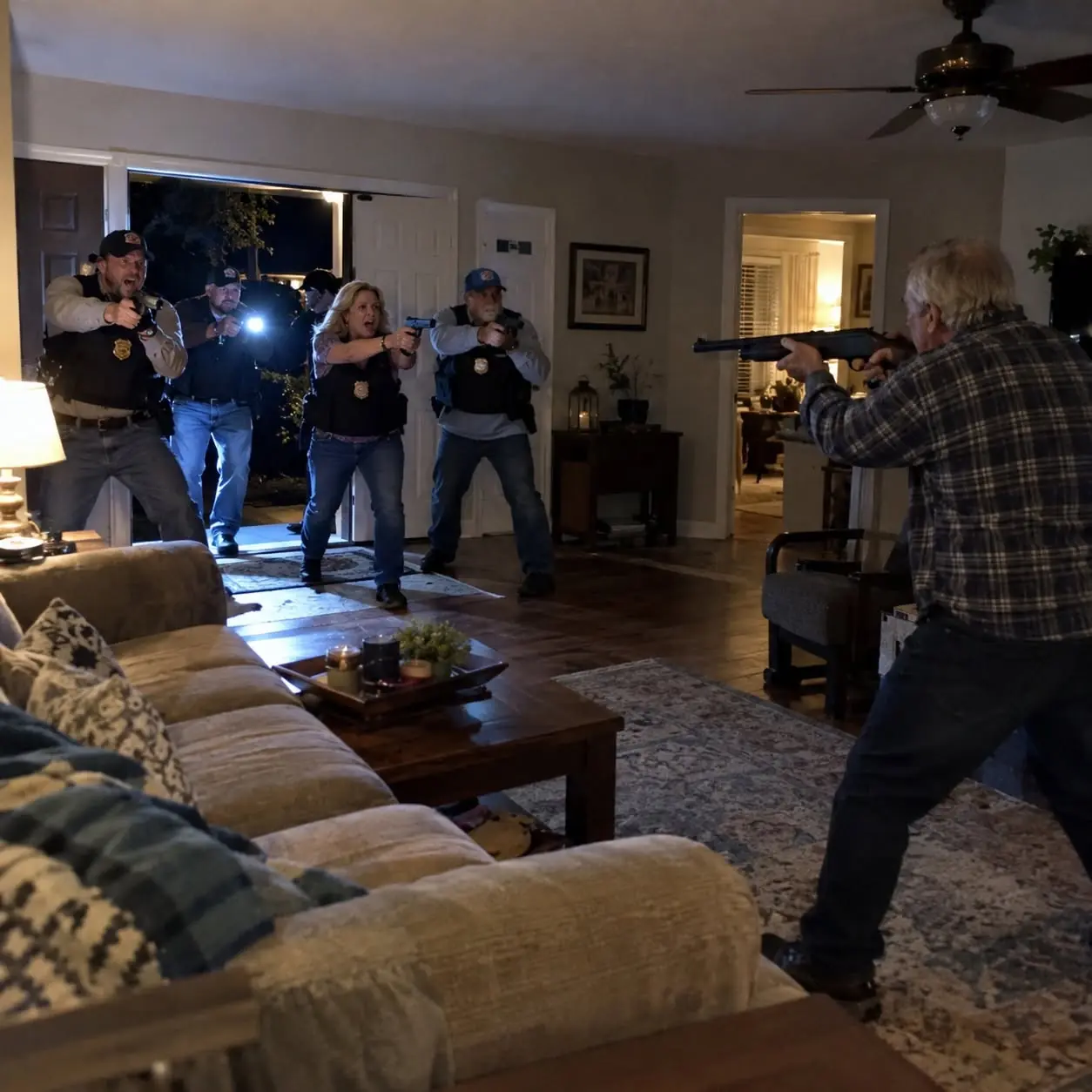
The morning after Angela Price took his case, James Harris woke up early, made coffee, and sat down at his kitchen table with a new sense of purpose. For three months, he had been on the defensive, reacting to letters and fines and threats, waiting to see what Veronica Lane would do next. Now, for the first time, he was going to go on the offensive. Not with a shotgun. Not with shouting. With records, and questions, and the kind of patient, methodical investigation he had spent forty years perfecting as a United States Marshal. Angela had told him the first step was to understand the HOA’s money, to follow the paper trail, to see where the fines went, and where the dues went, and why an association in a quiet suburb outside Atlanta needed so much money in the first place.
Angela arrived at his house just after nine, carrying a laptop, a notebook, and a stack of public records requests she had already prepared. She was dressed for work, sharp and professional, her hair pulled back, her eyes bright with the focus of a lawyer who had found a case she believed in. She spread her papers out on the kitchen table, and together, she and James began to dig.
The first thing they looked at was the HOA budget, a document every homeowner in Pinewood Estates was entitled to see, but one that Veronica Lane had made very difficult to obtain. James had requested a copy three times over the past year, and each time he had been told it was being updated, or it was not available, or he would have to pay a fifty-dollar copying fee. Angela had requested it formally, in writing, citing Georgia law, and the association had finally sent a thin packet, just a few pages, with numbers that did not add up.
Look at this, Angela said, pointing to a line on the budget. The association collects dues from one hundred and forty homes in Pinewood Estates. Each home pays four hundred dollars a year. That is fifty-six thousand dollars a year, just in dues. Then there are fines, and special assessments, and fees for everything from mailbox violations to grass height. Last year, the association reported total income of almost ninety thousand dollars. But when you look at expenses, landscaping, maintenance, insurance, legal fees, it only adds up to about forty thousand. So where did the other fifty thousand go?
James leaned in, his old investigator’s instincts waking up. He had followed money before, in federal cases, tracking fugitives who hid cash in storage units and offshore accounts, following paper trails that led through shell companies and false names. This was smaller, and simpler, but the pattern was the same. Money came in. Money did not come out in a way that made sense. And someone was not explaining where it went.
They spent the morning going through bank statements, or at least the few bank statements Angela had been able to obtain through her initial requests. The statements showed regular deposits, dues and fines coming in every month, steady and predictable. But the withdrawals were strange. There were checks written to a landscaping company James had never heard of, a company with no website, no office, no trucks he had ever seen in Pinewood Estates. There were payments to a consulting firm for community improvement, with no description of what the consulting had actually been. There were reimbursements to Veronica Lane herself, for expenses, for travel, for meals, for office supplies, hundreds of dollars at a time, with no receipts attached.
And then there was the biggest red flag of all. A series of transfers, month after month, to an account with a name James did not recognize, an account that Angela quickly identified as belonging to a property management company that had no contract with Pinewood Estates, at least not one anyone had ever seen. The transfers were for two thousand dollars, three thousand dollars, sometimes five thousand dollars, always round numbers, always just under the amount that would require board approval under the association’s own rules.
Angela sat back in her chair, her face grim. James, she said, I have seen this pattern before. It is called skimming. Someone is taking money out of the association a little at a time, in amounts small enough to avoid notice, but large enough to add up. If this has been going on for three years, and I think it has, we could be talking about a lot of money.
How much? James asked.
Angela did the math in her notebook, adding up the transfers, the unexplained reimbursements, the payments to companies that did not seem to exist. She worked quietly for several minutes, her pen moving quickly, her brow furrowed in concentration. When she finally looked up, her expression was even more serious than before.
About one hundred and eighty thousand dollars, she said quietly. Give or take. One hundred and eighty thousand dollars, unaccounted for, over three years. That is not a bookkeeping error, James. That is theft.
James felt a cold anger settle in his chest, the same anger he had felt on the night of the raid, but deeper now, colder, more focused. One hundred and eighty thousand dollars, taken from his neighbors, from people who trusted the HOA to maintain their streets and their common areas, from retirees on fixed incomes and young families trying to make ends meet. And all the while, Veronica Lane had been fining him fifty dollars a day for a mailbox, threatening to take his house, sending five men to break into his home in the middle of the night. The mailbox had never been the point. The mailbox had been a distraction, a way to keep James busy, to keep him focused on a small fight while a much bigger crime was happening right under his nose.
Do you think she knows? James asked. Do you think Veronica knows I am getting close?
Angela nodded. I think she has known for a while that you are a threat, she said. You are a retired federal law enforcement officer. You keep records. You ask questions. You do not back down. You are exactly the kind of person a thief is afraid of. That is why she wanted you gone. That is why the fines kept increasing. That is why she sent Roy Beckett and his men. She was not trying to enforce a mailbox rule. She was trying to force you to sell your house and leave Pinewood Estates before you figured out what she was doing.
That afternoon, they went to see Carl Whitfield. Carl was the HOA treasurer, and if anyone knew where the money went, it would be him. James had not wanted to put Carl in a difficult position, but Angela insisted. Carl was a witness, she said, and maybe a victim too. If he had been pressured, or threatened, or kept in the dark, he needed a chance to tell the truth before it was too late.
They found Carl at his home, a small ranch house on the far side of Pinewood Estates, sitting on his front porch with a glass of iced tea, looking tired and nervous. When he saw James and Angela walking up the driveway, he stood up quickly, his face pale.
James, he said, I do not want any trouble. I told you before, I voted against the fines. I did not want any of this.
We know, Carl, James said gently. We are not here to cause you trouble. We are here because we need your help. We need to understand the HOA’s finances. We need to know where the money went.
Carl hesitated, looking from James to Angela and back again, his hands shaking slightly. For a long moment, he said nothing, and James could see the fear in his eyes, the fear of a man who knew something dangerous and did not know whether it was safe to say it out loud. Then Carl sighed, sat back down, and motioned for them to sit with him.
I do not know everything, Carl said quietly. Veronica controls the checkbook. She controls the bank account. She signs the checks. I am treasurer in name only. I have asked her for full statements, for receipts, for contracts, and she always says she will get them to me, and then she never does. I have seen things that did not look right. Payments to companies I have never heard of. Reimbursements with no receipts. Transfers I did not approve. I asked her about them once, and she told me to mind my own business, that she was the president and she knew what she was doing, and that if I kept asking questions, she would have me removed from the board.
Angela leaned forward. Carl, she said, did you ever see the account for the property management company? The one that received regular transfers?
Carl nodded slowly. I saw the name, he said. I asked Veronica what it was for, and she said it was for emergency repairs, for work that had to be done quickly. But I never saw any repairs. I never saw any invoices. I never saw any work orders. I think it is a shell, a fake company. I think the money goes somewhere else. I just do not know where.