James put a hand on Carl’s shoulder. Carl, he said, you did the right thing by telling us. You are not in trouble. But you need to be honest with the sheriff, and with Angela, about everything you know. If Veronica has been stealing from the association, she will try to blame someone else. She will try to blame you. The only way to protect yourself is to tell the truth, now, before she gets a chance to lie about you.
Carl nodded, tears in his eyes. I will tell the truth, he said. I am tired of being afraid. I am tired of watching her bully people. James, I am sorry about the fines. I am sorry about the raid. I should have spoken up sooner.
That evening, back at James’s house, Angela spread all of their findings out on the kitchen table, the budget, the bank statements, the list of transfers, Carl’s statement, and she looked at James with a mixture of excitement and concern.
We have enough to go to the sheriff, she said. We have enough to request a full audit. We have enough to show a pattern of theft, and retaliation, and abuse of power. But James, I need you to understand something. This is going to get bigger. This is no longer just about a mailbox, or a lien, or a raid. This is about one hundred and eighty thousand dollars, and a woman who has been stealing from her neighbors for three years, and who sent five men to break into your home to keep you quiet. She is not going to give up easily. She is going to fight, and she is going to fight dirty. Are you ready for that?
James looked out the window at Eleanor’s garden, at the flowers pushing up through the soil, at the oak tree, at the house he had promised his wife he would take care of. He thought about Laura, and Tom, and Walter, and Carl, and all of the neighbors in Pinewood Estates who had been too afraid to speak up, who had paid their dues and their fines and hoped the trouble would pass them by. He thought about forty years of chasing fugitives, of standing up to men who thought they were above the law, of believing that the truth mattered, even when it was hard, even when it was dangerous.
I am ready, he said quietly, his voice steady. I have been ready since the night they broke into my home. I am not going to fight them with a gun, Angela. I am going to fight them with the law, with records, with evidence, with the truth. And I am going to win, not just for me, but for everyone in Pinewood Estates who deserves to know where their money went. Veronica Lane wanted me to sell my house and leave. Instead, I am going to stay, and I am going to make sure she answers for what she did.
Angela smiled, the first real smile James had seen from her all day. Then let us get to work, she said. We have a case to build, and a neighborhood to save. And James, I have a feeling this is only the beginning.
Outside, the night was settling over Pinewood Estates, quiet and warm, the fireflies beginning to glow in the gardens, the porch lights coming on one by one. Inside James Harris’s house, the kitchen light burned late into the night, as a retired marshal and his lawyer laid out the evidence, piece by piece, building a case that would change everything. The mailbox war was over. The real war, the war for the truth, and for Pinewood Estates itself, had just begun.
---
Chapter 6 - Threats in the Daylight
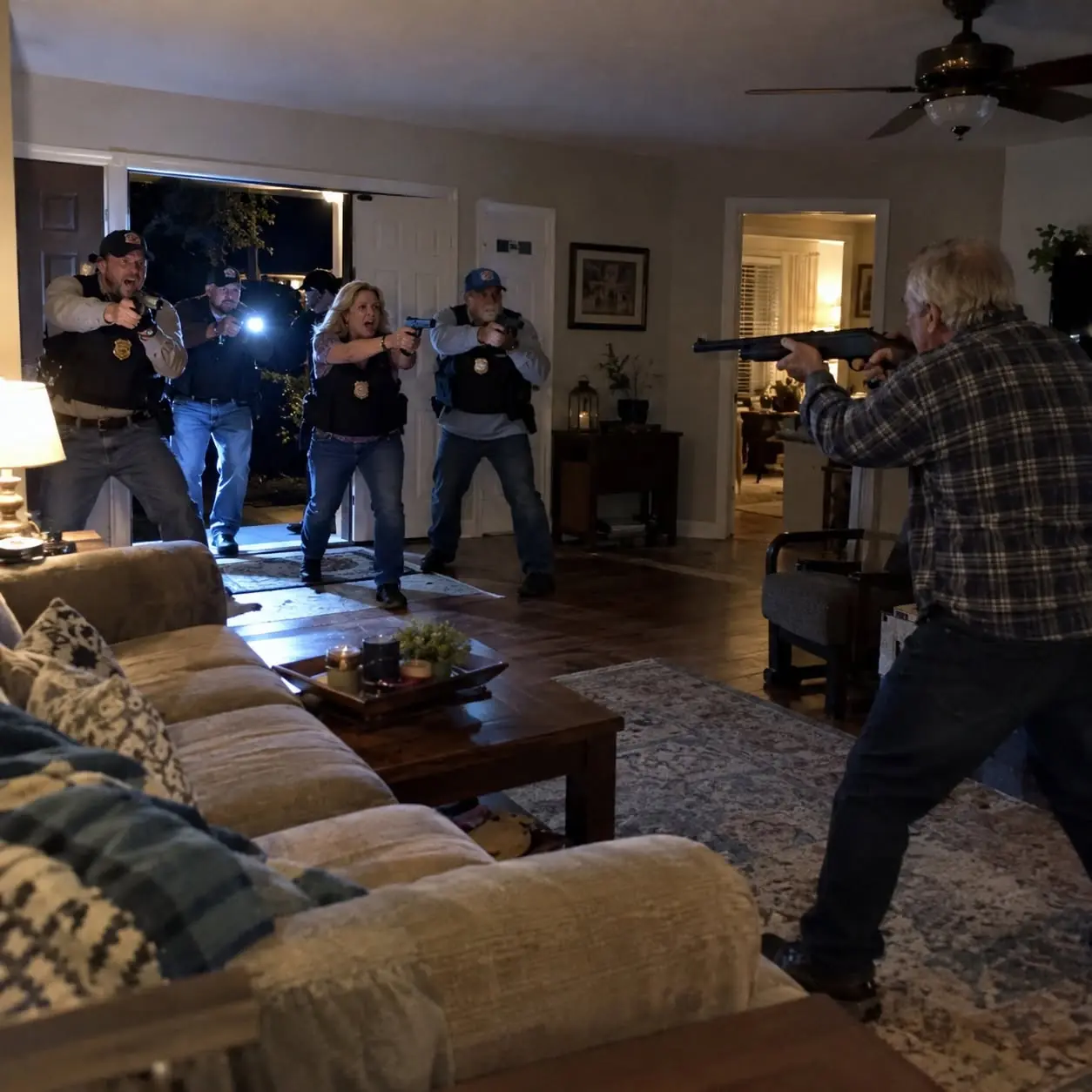
The morning after Sheriff Dan Whitaker left James Harris's house, Pinewood Estates looked exactly the way it always had, and that was the first lie of the day. The lawns were trimmed, the mailboxes stood in their neat rows, the sun fell warm across the quiet street outside Atlanta, and a man driving past would have seen nothing but an ordinary suburb settling into an ordinary Tuesday. James stood at his kitchen window with a mug of coffee in his hand and watched it anyway, the way he had watched a thousand streets before a raid in his years as a United States Marshal, looking not at what was peaceful but at what did not belong. His shotgun was locked in the cabinet now, the house was quiet, and the night before felt distant in the daylight, but he knew better than to trust daylight. Daylight only meant that the men who had come at one in the morning would have to find a different way to reach him.
He had slept in short pieces, waking every hour to listen, and by five he had given up on sleep altogether. He walked the house slowly, checking every door and window the way he had checked them the night before, and he found nothing new broken and nothing new missing. The cameras on the corners of the house blinked their small red lights, patient and awake, and he checked each feed on the small monitor in his study, rewinding through the hours after the sheriff had gone. A stray cat crossed the driveway at three fourteen. A delivery truck passed on the main road at four forty. Nothing else moved until dawn. He saved the files anyway, copying them to the same offsite drive he had used for the footage of the break-in, because he had learned long ago that the absence of movement could matter just as much as movement itself, and because a man who had spent four decades building federal cases did not leave a gap in the record.
Eleanor would have made breakfast by now if she were still alive. The thought came to him without warning, the way it still did three years after her death, and it stopped him in the middle of the kitchen. She had liked slow mornings, the radio low, the smell of toast in the air, her hands in the soil of the flower beds before the heat settled in. The men who had crossed his yard in the dark had crushed a row of those flowers, the ones she had planted the spring before she died, and he had not yet been able to bring himself to replant them. He stood there for a moment with the coffee cooling in his hand, looking out at the bare patch of dirt where the stems lay broken, and he felt the grief rise up clean and sharp underneath the anger. Then he set the mug down, put on his work gloves, and went outside to tend what was left, because grief was not a reason to stop and because Eleanor had always believed a yard told the truth about the people who lived in it.
He was kneeling beside the flower bed when he heard the car. It was not loud, and it was not fast, but it was wrong, a slow crawl past his house with the windows up and the engine low, the kind of pass a man made when he wanted to be seen without having to stop. James did not look up right away. He kept his hands in the dirt, pulling a weed, letting the car go by, and only when the sound faded did he lift his head and watch it turn at the end of the street. It was a dark sedan he did not recognize, and he made a note of the shape and the color and the way the driver had kept his face turned away. He did not chase it. He did not wave. He went back inside, wrote the time and the description in the notebook he had started the night the five men came, and added it to the file Angela Price had told him to keep. Documentation, she had said, was the difference between a story and a case, and James Harris intended to give her a case.
By nine o'clock the street had woken up properly. A woman two doors down walked her dog past his yard and gave him a small, uncertain wave, the kind of wave people gave when they had heard something but did not know what to say about it. James waved back. An hour later Walter Briggs came across the lawn with two cups of coffee from his own kitchen, moving slowly at seventy-two with the stiff careful walk of a man whose knees had carried him through a war and a lifetime of work since. Walter did not ask how James had slept. He handed him the coffee, looked at the broken flowers, and said that he had heard the sheriff's car in the night and had stayed up himself until nearly three, watching his own windows. James thanked him and told him the short version of what had happened, leaving out nothing important and adding nothing extra, and Walter listened the way old soldiers listened, without interrupting and without offering easy comfort. When James finished, Walter shook his head and said that in all his years in Pinewood Estates he had never seen anything like it, and that a homeowners association had no business sending men into a house at one in the morning, no matter what the argument was about.
They were still talking on the porch when James noticed the first flat tire. He had parked his truck in the driveway as usual, facing out toward the street, and from the porch he could see that the front tire on the driver's side sat low and wrong against the concrete. He set his coffee down and walked over, crouching beside the wheel, and the cut was plain to see, a clean slash through the sidewall, too straight and too deep to be a nail or a piece of glass. He stood up slowly, his knees protesting, and walked around the truck. The rear tire on the same side was cut the same way, the rubber split open like a mouth. Whoever had done it had worked quietly and quickly, in the early morning after the sheriff left and before the street woke, and had wanted James to find the damage in the daylight, where everyone could see it. Walter came to stand beside him, his face darkening, and said the word James was already thinking. That was no accident. That was a message.
James did not raise his voice. He did not kick the tire or curse the men who had done it. He went inside, got his phone, and photographed both tires from every angle, close enough to show the cuts and wide enough to show the truck in his driveway with the house behind it. He photographed the tread, the driveway, the street, and the time on his watch beside the damage. Then he called Sheriff Dan Whitaker and reported it in a flat, steady voice, giving the sheriff the facts and nothing more, and Whitaker said he would send a deputy out to take a report and that James should not move the truck until they had seen it. James thanked him, hung up, and went back outside to wait with Walter, who stayed on the porch with him like a man standing guard without being asked. The neighbors who passed slowed their cars a little more now, looking at the truck, looking at the two old men on the porch, and James could feel the street beginning to divide itself into people who would meet his eyes and people who would look away.
Deputy Rosa Delgado arrived within the hour, polite and professional, her notebook already open. She photographed the tires herself, measured the cuts, asked James what time he had last seen the truck whole, and wrote down his answer without surprise. James told her about the dark sedan that had crawled past that morning, and she wrote that down too. She told him that tire slashings were hard to prove without video, and James pointed to the camera above his garage without a word. He played the footage back for her on his phone, and there it was, grainy but clear in the pale light before dawn, a figure in a dark jacket moving low beside the truck, a hand rising and falling twice, then the figure slipping away down the side of the house toward the street. The face was hidden by a hood, but the build was familiar, and the walk was familiar, and James did not need to name the man out loud for Delgado to understand what she was seeing. She copied the clip, thanked him, and said the sheriff would be in touch. When she drove away, James felt no satisfaction, only the cold certainty that the men who had come at night had not been frightened off at all. They had simply changed their hours.
The note came that afternoon. James found it when he went to the front door to bring in a package that had been left on the porch, a plain white envelope taped to the door at eye level, with no stamp and no name, only his last name written in heavy black marker. HARRIS. He did not open it on the porch. He carried it inside with two fingers, set it on the kitchen table, photographed the front and back, and then put on a pair of gloves from under the sink before he opened it, the way he had opened a hundred pieces of evidence in his working life. Inside was a single sheet of paper, the words printed in block capitals from a home printer. SELL AND LEAVE. NEXT TIME WE WON'T KNOCK. THERE IS NO NEXT WARNING. He read it twice, slowly, and then he read it a third time, because he wanted to be sure of every word before he put it in a plastic bag and wrote the date and time on the outside. He called Angela Price next, and he read the note to her word for word, and she told him not to touch it again, to keep it exactly as it was, and to send her the photographs. She said a threat in writing was worth ten threats shouted in the dark, and James could hear the quiet anger underneath her professional calm.
Laura called while he was still on the phone with Angela, and her voice on the second line made his chest tighten before she said a word. He finished with Angela, called his daughter back, and Laura told him that a car had followed her home from the grocery store that morning, staying two lengths behind her all the way from the highway exit to her street, close enough that she could see the driver in her mirror but not close enough to read a plate. When she turned into her driveway, the car had kept going, but slowly, the same slow crawl he had seen past his own house that morning. Her husband Tom had gone outside to look, but the car was gone by then, and Laura had locked the doors and called her father instead of calling the police, because her father was the man who knew what to do. James listened without interrupting, his hand tightening on the phone, and he told her in the calmest voice he could manage to stay inside, to keep the doors locked, to write down everything she remembered about the car, and to call the sheriff if it came back. He told her he loved her, and he told her he was proud of how steady she sounded, and after he hung up he stood in his kitchen for a long time, staring at the note in its plastic bag, feeling the anger settle into something harder and colder than anger.
That evening the neighborhood began to choose sides in earnest. Walter Briggs came back after supper and sat on the porch with James until the light faded, and two other neighbors stopped by in the course of the evening, one with a casserole and one with a question about what had really happened. James told them the truth in plain language, that five men had forced their way into his house at night claiming to be an HOA enforcement unit, that the sheriff had come, that his tires had been cut and a threat left on his door, and he let the facts speak for themselves. The woman with the casserole said she had always thought Veronica Lane ran the association like her own private kingdom, and the man with the question said he had received a fine himself once for a fence that was two inches too tall, and had paid it because fighting it cost more than the fine. Neither of them promised anything, but neither of them looked away either, and James understood that this was how a neighborhood decided what it believed, not all at once but one porch conversation at a time.
Not everyone came to his porch. Across the street, a light stayed on late in a house James knew belonged to a man who had always been close to the HOA board, and twice James saw a figure at the window, watching his house the way he had watched the dark sedan that morning. Down the block, another neighbor who had once complained loudly about James's mailbox, the same mailbox that had started the whole dispute, walked past without a wave, his eyes fixed on the sidewalk. James did not take it personally. He had spent forty years watching communities split under pressure, and he knew that fear made people quiet and that quiet could look like agreement with the loudest voice in the room. He also knew that Veronica Lane had spent years building her authority in Pinewood Estates, fine by fine, meeting by meeting, and that some people had learned it was easier to stay on her good side than to ask whether her side was right.
Before bed, James walked the house one more time, checking the locks, checking the cameras, checking the shotgun in its cabinet and leaving it locked, because he did not intend to give anyone a reason to call him the aggressor. He put the bagged note in the safe in his study, beside the copies of the HOA fine and the photographs of the break-in, and he wrote the day's events into his notebook in his small, neat handwriting, the tires, the sedan, the note, Laura's call, the names of the neighbors who had stopped by and the ones who had not. He set his phone to charge beside his bed, left the porch light on, and lay down in the dark listening to the house settle around him. Outside, Pinewood Estates was quiet again, the way it had been quiet the night before the five men came, and James Harris, seventy years old and widowed and alone in the house he had shared with Eleanor, closed his eyes and waited for whatever daylight had not finished. He was not afraid. He was patient. And patience, he had learned long ago, was the most dangerous thing a man could bring to a fight he had not started.
Chapter 7 - An Old Friend in the FBI
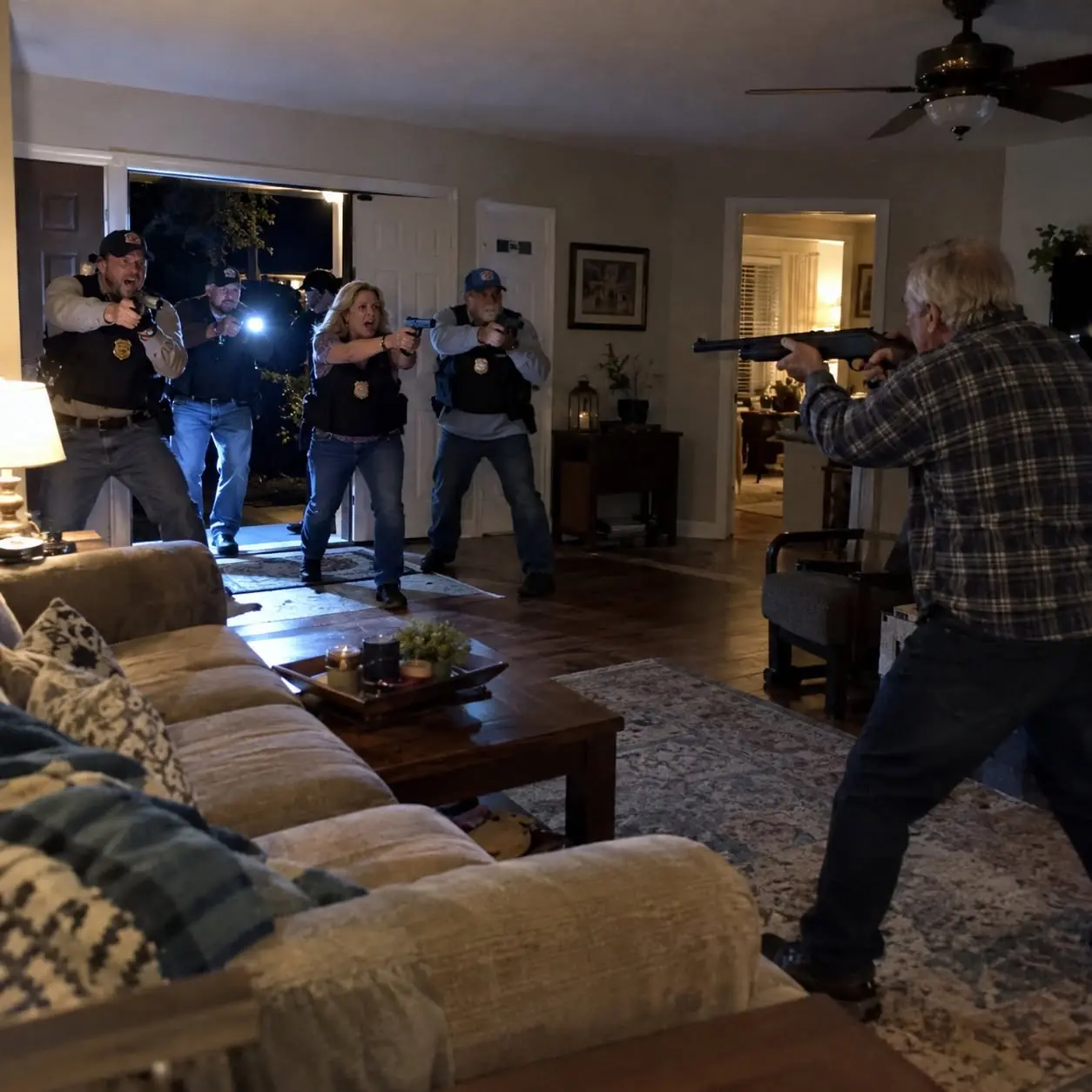
James Harris waited until morning to make the call. It was a rule he had kept since his days in the Marshal Service, that a man should never make an important call in the heat of the night, when anger made the voice shake and the words came out wrong. He drank his coffee, checked the cameras, walked the yard in the early light, and looked at the bare patch where Eleanor's flowers had been crushed. Then he went into his study, closed the door, and took out the small black address book he had kept for thirty years, the pages soft with use, the numbers written in his own hand. He turned to the page he had not touched in a long time, found the number he wanted, and dialed it before he could talk himself out of it. The phone rang three times, and then a familiar voice answered, older and rougher than he remembered, but still unmistakable. Frank Calloway had been his partner on fugitive operations in the days when they were both young enough to run up stairs without thinking about it, and the sound of his voice brought back a whole life in a single second.
James did not waste time on small talk. He told Frank who he was, where he was, and what had happened, starting with the night the five men had come through his door at one in the morning and ending with the tires and the note and the car that had followed his daughter Laura home. He gave the facts in order, the way he had always given a briefing, the names Roy Beckett and Clint Foster and Eddie Marsh and Paul Sorensen and Glen Yates, the crowbar and the bolt cutters and the plastic badge and the short-handled shovel, the matching navy shirts that read HOA ENFORCEMENT UNIT, the cameras that had recorded it all. He told him about the twelve thousand four hundred dollar fine and the lien threat, and about the hundred and eighty thousand dollars that he and Angela Price had found unaccounted for in the HOA records. He did not raise his voice. He did not ask for a favor. He laid it out the way one professional laid a case before another, and then he stopped talking and waited.
Frank was quiet for a long moment on the other end of the line. James could hear the sound of a pen tapping against a desk, a habit Frank had always had when he was thinking hard. Then Frank said, slowly, that James had just described three federal crimes before breakfast, and that the men who had done it probably had no idea how much trouble they were in. Impersonating law enforcement was not a prank, Frank said. It was a federal offense, and it did not matter that the badge was plastic or that the shirts were homemade. If a man walked into a home in the dark claiming to be law enforcement and carrying tools meant to break things open, the law did not care whether his uniform came from a police supply store or a costume shop. What mattered was the intent to frighten and control, and the five men in Pinewood Estates had shown their intent on camera for the whole world to see.
James listened, standing at the window of his study, looking out at the quiet street. Frank went on, his voice turning into the careful, precise voice he used when he was building a case in his head. Conspiracy was the second problem for the men, he said, because five men did not arrive at a house at one in the morning by accident. They had planned it, they had dressed for it, they had brought tools for it, and they had divided the work between them. That was agreement, and agreement to commit a crime was a crime in itself. The third problem was the money. If the homeowners association had used the mail or the wires to send false fines, false liens, or false notices, and if a hundred and eighty thousand dollars had moved through the accounts without a proper record, then the case was no longer just about a break-in. It was wire fraud and mail fraud, and those were the charges that turned a local dispute into a federal investigation. Frank said the words plainly, without excitement, and James felt the weight of them settle in his chest, not as relief but as recognition. He had seen this shape before, many times, a small crime on the surface and a larger crime underneath.