Harris thought about it for a moment. He had never wanted to be involved in HOA politics. He had wanted to be left alone to live quietly with Eleanor's memory and his garden. But he had learned in the last few months that being left alone is not the same as being safe, and that a neighborhood that does not pay attention to who is running it will end up being run by the wrong people. He nodded slowly.
"I will help," he said. "I will not run for the board. I am seventy years old and I have done my service. But I will help write the rules, if they want me to. And I will tell them what I told the jury. Real authority rarely needs theater. If someone shows up at your door shouting about enforcement, ask to see a real badge, a real warrant, a real reason. And if they cannot show you, call the sheriff."
Whitaker smiled. "I will tell them that. I think they will listen."
In the weeks that followed, the replanting continued, not just in Harris's yard but in the neighborhood as a whole. The interim HOA board, made up of honest neighbors who had volunteered after Veronica Lane's arrest, worked with Angela Price to draft new bylaws. The new rules were simple and clear. No one could claim to be law enforcement unless they were law enforcement. No one could enter a neighbor's property to enforce HOA rules without a court order. No fines could be imposed without written notice and a fair hearing. All HOA finances would be audited every year by an outside accountant, and the results would be published to every homeowner. The treasurer's books would be open to anyone who asked. There would be no more secret accounts, no more missing money, no more kickbacks.
The new board was elected at a community meeting in the same room where Veronica Lane had been arrested, and this time the room was full of people who were not afraid. They voted in the open. They asked questions. They argued, politely, about the budget and about the playground and about the roads. It was democracy in its smallest, most ordinary form, and it was beautiful to watch after months of fear. The new president was a retired teacher named Margaret Ellis, a woman in her sixties who had lived in Pinewood Estates for twenty years and who had never wanted power, only fairness. The new treasurer was a young accountant named David Chen, who promised to keep the books so clean you could eat off them. The new board members were neighbors Harris had known for years, people who had been quiet during Veronica's reign because they had been afraid, and who were quiet no longer.
Carl Whitfield, who had cooperated with the government and testified truthfully, was not on the new board, and he did not ask to be. He had moved away from Pinewood Estates to start over somewhere else, and Harris wished him well. Whitfield had done wrong, and he had paid for it, and he had helped make things right by telling the truth. That was enough. Harris did not hold a grudge. He had spent forty years learning that people can change when they decide to, and Whitfield had decided to.
Nathaniel Cross's development company was gone, its projects halted, its access road never built. The lot Harris had refused to sell remained his, and the land around it remained as it was, pine trees and quiet streets and families living their lives. Cross would spend years in prison, and when he came out, he would be an older man with a different life ahead of him. Harris did not think about him often. He had better things to think about.
The garden grew through the summer. The marigolds bloomed bright and steady. The zinnias grew tall and proud. The petunias spilled over the border in waves of color. The roses, small at first, began to put out new buds, and by late summer they were blooming too, pink and red and white, the way Eleanor's roses had bloomed. Harris tended them every morning, watering, weeding, pruning, talking to them sometimes the way Eleanor had talked to them, not because he thought they could hear him, but because it made him feel close to her. Laura brought the children over often, and they helped water and pick the occasional flower to put in a vase on the kitchen table. Tom Bennett fixed the fence where it had sagged and built a new bench near the garden so Harris could sit and enjoy it in the evenings. Walter Briggs came over most days, sometimes to help, sometimes just to sit on the porch and talk.
One evening in late summer, Harris and Briggs sat on that new bench, looking out at the garden as the sun went down and the fireflies came out. The flowers were in full bloom, and the yard smelled sweet, and the neighborhood was quiet in the best way, the quiet of people living their lives without fear.
"You did a good job with this garden, James," Briggs said. "Eleanor would be proud."
"I did not do it alone," Harris said. "The whole neighborhood did it. I just showed them where to dig."
"That is how it is supposed to work," Briggs said. "A neighborhood takes care of its own. It took us a while to remember that, but we remembered."
Harris nodded. He thought about the night the men had come to his door, about the fear and the anger and the long fight that had followed. He thought about the courtroom, about the tape playing in the dark, about the verdicts, about the sentences, about the lien being voided. He thought about all the people who had helped him, Laura and Tom and the children, Angela and Calloway and Whitaker and Delgado, Briggs and the neighbors who had shown up with seedlings and shovels on a Saturday morning without being asked. He thought about Eleanor, and he felt her presence in the garden, not as a ghost, but as a memory that had been honored, a promise that had been kept.
"I am glad we replanted," Harris said quietly. "I am glad we did not let them take that too."
Briggs put a hand on his shoulder. "They did not take anything that mattered, James. They tried, but they did not. The house is still yours. The garden is still yours. The neighborhood is still ours. That is what replanting means. It means you do not let the damage be the last word."
They sat there until the light faded and the fireflies grew brighter, and then they went inside, and Harris slept well, dreaming of flowers and of Eleanor smiling in the garden, and of a neighborhood that had learned, the hard way, how to take care of each other again. The healing was not finished, not completely, because healing takes time, but it had begun, and it was real, and it was growing, just like the garden, one day at a time, one flower at a time, until the bare patches were gone and only color remained.
---
Chapter 15 - Home at Last
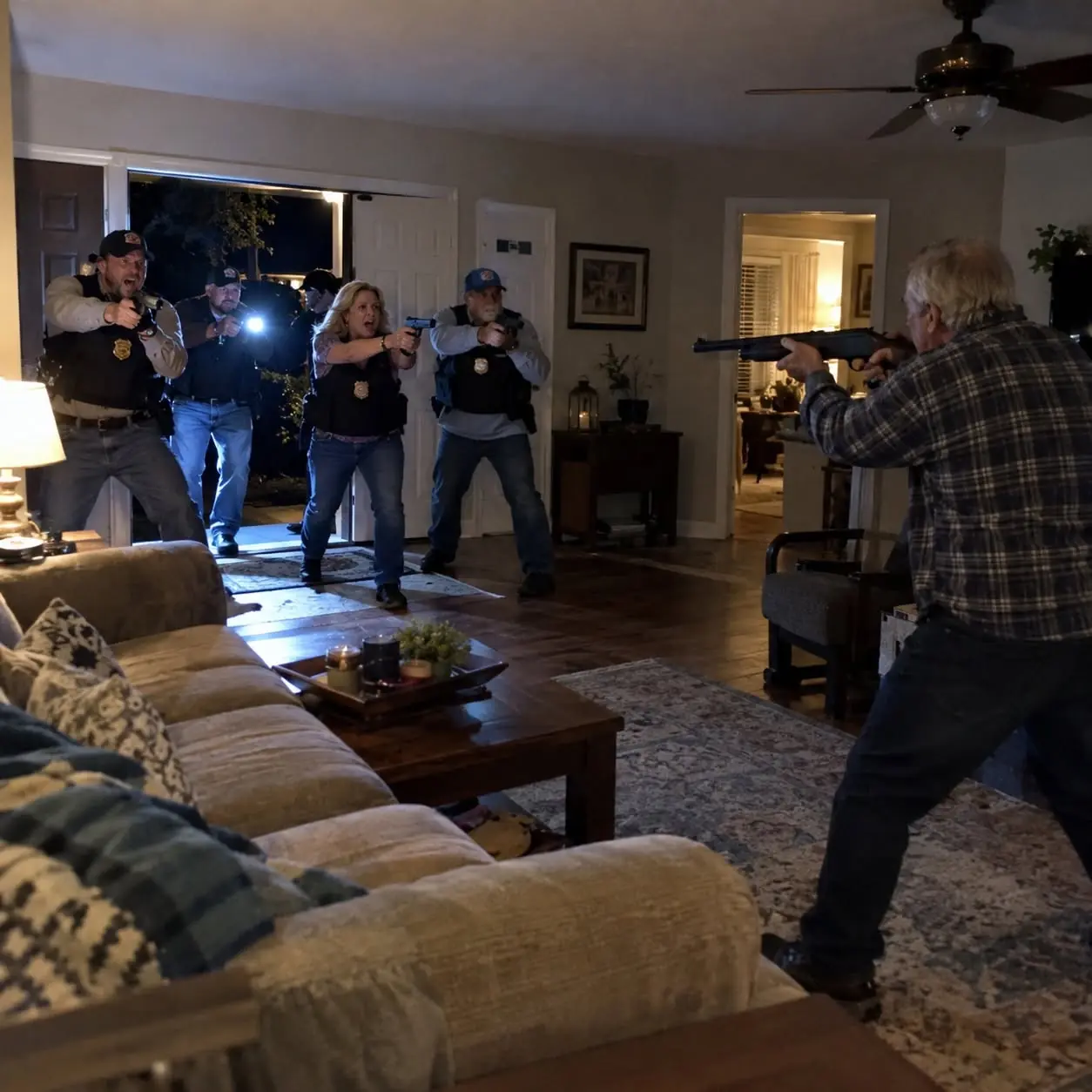
One year later, on a warm Saturday in late spring, James Harris stood in his front yard in Pinewood Estates and looked at his garden, and he could hardly believe how much had changed. The flower beds that had once been crushed under the boots of five men in matching navy shirts were now in full bloom, a riot of color that Eleanor Harris would have loved. The marigolds lined the edges in bright gold. The zinnias stood tall in the back, red and pink and orange, swaying gently in the breeze. The petunias spilled over the borders in waves of purple and white. The roses, which had been small and tender when they were replanted, were now strong and full, their blooms large and fragrant, pink and red and white, filling the air with a sweetness that drifted across the whole yard. The oak tree shaded the lawn where children played. The mailbox stood straight at the end of the driveway, freshly painted, with no fines and no threats attached to it. The house behind him, the house he and Eleanor had shared, looked the way a home is supposed to look, cared for, lived in, loved.
It was the day of the community barbecue, and Harris had been up since dawn getting ready. He had not planned to host it. The new HOA board had suggested it, Margaret Ellis, the retired teacher who was now president, had proposed holding it at his house as a way to celebrate how far Pinewood Estates had come, and Harris had agreed, though he had insisted it not be about him. He had said it should be about the neighborhood, about everyone who had helped rebuild trust after Veronica Lane and Nathaniel Cross and the fake enforcement unit had tried to tear it apart. Margaret had smiled and said that was exactly why it should be at his house, because his house was where the neighborhood had learned to stand together again. Harris had not argued after that. He had gone to the store, bought burgers and hot dogs and buns and lemonade, borrowed extra tables and chairs from Walter Briggs, and spent the morning setting up in the backyard, where the grill stood ready and the picnic tables were covered with checkered cloths.
By eleven o'clock, the yard was full. Laura Harris Bennett arrived first with Tom Bennett and the children, carrying a big bowl of potato salad and a tray of brownies, the kids running ahead to the garden to see which flowers had bloomed since their last visit. Laura hugged her father hard, the way she always did now, a little longer than she used to, as if she wanted to make sure he was really there and really all right. Tom shook his hand and clapped him on the shoulder, then went straight to the grill to help. The grandchildren, who had grown taller in the last year, chased each other around the oak tree, laughing, their voices bright in the warm air.
Walter Briggs arrived next, seventy-three now, wearing his wide-brimmed hat, carrying a cooler full of iced tea, his wife beside him for once, a kind woman named Ruth who had baked a peach pie that smelled wonderful even through the foil. Briggs looked at the garden, at the barbecue, at the crowd already gathering, and he shook his head slowly, smiling.
"You did it, James," he said. "You made it home again."
"We did it," Harris said. "All of us."
Sheriff Dan Whitaker came with Deputy Rosa Delgado, both out of uniform, both smiling, both carrying side dishes, Whitaker with a platter of fried chicken from his favorite place in Atlanta, Delgado with a bowl of fresh fruit. They had become friends over the last year, not just law enforcement officers who had worked a case, but neighbors who checked in, who stopped by, who cared. Whitaker looked at Harris and nodded, the way men who have been through a hard fight together nod, without needing words.
Frank Calloway arrived a little later, his suit jacket off, his sleeves rolled up, carrying a case of cold drinks. He had retired from the FBI himself a few months earlier, after a long career, and he had told Harris that watching this case through to the end had been one of the proudest moments of his service. He shook Harris's hand and looked around at the yard, at the garden, at the families, and he smiled in a way Harris had rarely seen from him in all their years working together.
"This is what we were fighting for," Calloway said quietly. "Not just convictions. This. A man at home in his own yard, with his family around him, with his neighbors around him, safe."
Angela Price came too, in a summer dress instead of a courtroom suit, her hair down, holding a bouquet of flowers she had bought for the table, not because she thought Harris needed more flowers, but because she wanted to add something beautiful to a beautiful day. She had become a friend as well as a lawyer, the person Harris called when he needed advice, the person who had stood beside him in court and made sure the law did what it was supposed to do. She hugged him and looked at the garden.
"Eleanor would have loved this," she said, echoing what Laura had said a year earlier on the day of the replanting.
"She would have," Harris said. "She always loved a full house."
Margaret Ellis, the new HOA president, arrived with the rest of the board, David Chen, the young treasurer, and several other neighbors who had volunteered to lead Pinewood Estates in a new direction. They brought salads and desserts and extra chairs, and they set up a small table near the porch with a sign that said welcome, neighbors, in bright letters. Margaret came over to Harris and took his hand in both of hers.
"James, I want you to know something," she said. "When I took this job, I was scared. After everything that happened with Veronica Lane, I thought no one would trust the HOA again. But then I watched what happened here, in your yard, on the day everyone came to replant the garden. I watched neighbors who had been afraid to talk to each other start talking again. I watched a community remember how to take care of each other. That is why I said yes. And that is why we are here today. Not to celebrate me, not to celebrate the board, but to celebrate the fact that Pinewood Estates is a neighborhood again."
Harris thanked her, and he meant it. The new HOA was everything the old one had not been. The books were open. The meetings were public. The finances were audited every year by an outside accountant, and the results were sent to every homeowner. No one claimed to be law enforcement unless they were law enforcement. No one entered a neighbor's property without a court order. No fines were imposed without written notice and a fair hearing. The rules were written down, voted on in the open, and followed. It was not perfect, because no human institution is perfect, but it was honest, and honesty, Harris had learned, was enough to build trust again, one meeting at a time.
As the afternoon went on, more neighbors arrived, dozens of them, families Harris had known for years and families who had moved in during the last year, drawn by the story of a neighborhood that had stood up to corruption and rebuilt itself. Children played on the lawn. Teenagers helped at the grill. Older couples sat in lawn chairs under the oak tree, talking and laughing. Someone had brought a portable speaker, and music played softly in the background, old songs Harris recognized from his younger days, songs Eleanor had liked. The smell of burgers and hot dogs drifted across the yard, mixing with the scent of roses and fresh-cut grass. It was, in every way that mattered, an ordinary American barbecue on an ordinary Saturday in Georgia, and Harris had never been so grateful for ordinary.
At two o'clock, Sheriff Whitaker stood up on the porch steps and asked for everyone's attention. The yard went quiet, the music was turned down, the children stopped running, and all eyes turned to the porch. Whitaker cleared his throat, looking a little embarrassed to be the center of attention, but determined to say what needed to be said.
"I do not make speeches," he said. "Most of you know that. But today I want to say something, and I want to say it here, in James Harris's yard, in front of all of you, because this is where it matters. A year ago, this neighborhood went through something hard. A year ago, five men broke into this house in the middle of the night, pretending to be something they were not, trying to frighten a good man out of his home. A year ago, a lot of people in Pinewood Estates were afraid. Afraid to speak up. Afraid to trust each other. Afraid that the people in charge did not care about them. Today, I look out at this yard, and I do not see fear. I see families. I see friends. I see a garden in full bloom. I see a community that stood up, told the truth, and took its neighborhood back. That did not happen by accident. It happened because one man refused to be frightened, and because all of you refused to stay silent. So I want to thank James Harris, not just for what he did that night, but for what he has done every day since. He showed us what courage looks like, and he showed us what home looks like."
The yard erupted in applause, and Harris felt his face grow warm. He had never liked being the center of attention. He had spent his career working in the background, bringing fugitives in quietly, doing his job without fanfare. But as he looked out at the faces applauding him, at Laura crying happy tears, at Tom grinning, at the grandchildren cheering, at Walter Briggs nodding, at Angela and Calloway and Whitaker and Delgado and Margaret Ellis and all the neighbors who had become friends, he allowed himself to accept it, just for a moment, not as praise for himself, but as recognition for all of them, for what they had built together.
Margaret Ellis stepped up beside Whitaker then, holding a small wooden plaque. She held it up so everyone could see it. It was simple, carved with care, and it read, in plain letters, Pinewood Estates Community Honor, Presented to James Harris, Retired United States Marshal, For Courage, Service, and Faith in His Neighbors. She handed it to Harris, and he took it in both hands, looking down at the words, feeling the smooth wood under his fingers, thinking about Eleanor, thinking about the garden, thinking about the long road that had led from a shout at one in the morning to this sunny afternoon in his own yard.
"I do not know what to say," Harris said, his voice a little rough, and the yard laughed gently, because they knew he meant it. "I just want to say thank you. Thank you to my daughter Laura, and to Tom, and to my grandchildren, who never stopped believing in me. Thank you to Walter, who has been a friend and a neighbor in every way that matters. Thank you to Sheriff Whitaker and Deputy Delgado, to Agent Calloway, to Angela Price, who believed me and fought for me and never gave up. Thank you to all of you, my neighbors, who came here a year ago with seedlings and shovels and helped me replant a garden that I thought might be lost forever. Eleanor planted those flowers because she believed this place was home. Today, looking out at all of you, I know she was right. This is home. It always was. And it always will be."
He paused, and he looked at the garden, at the roses blooming, at the marigolds and the zinnias and the petunias, at the children playing, at the families eating and laughing, at the life that had returned to Pinewood Estates, and he smiled, a real smile, deep and unguarded.
"I am seventy-one years old now," he said. "I have spent forty years chasing fugitives and a year fighting for my home. I am done chasing. I am done fighting. From now on, I am going to tend my garden, sit on my porch, watch my grandchildren grow, and be a neighbor. That is enough. That is more than enough. That is home at last."
The applause came again, louder this time, and Laura came up and hugged him, and Tom shook his hand, and the grandchildren ran over and hugged his legs, and Walter Briggs clapped him on the back, and the neighbors came up one by one to shake his hand and thank him, not for being a hero, but for being a neighbor who had refused to give up on his home and on them.
The barbecue went on into the late afternoon, and then into the evening, as the sun went down and the string lights someone had hung in the oak tree came on, glowing warm and soft over the yard. The music played on. The children, tired from playing, fell asleep on blankets on the lawn. The adults sat in lawn chairs, talking quietly, enjoying the cool evening air, the scent of roses, the feeling of being together without fear. Harris sat on his porch steps with Laura beside him, Tom on the other side, the grandchildren asleep nearby, Walter Briggs in the chair next to him, and he looked out at his yard, at his garden, at his neighborhood, at his life, and he felt a peace he had not felt in a long time, a peace that had nothing to do with winning a case and everything to do with being home.
Later, after the last neighbors had gone home, after the tables had been folded and the chairs stacked and the grill cleaned, after Laura and Tom and the children had hugged him goodnight and driven home, after Walter Briggs had waved from his porch and gone inside, Harris stood alone in his yard for a moment, looking at the garden in the moonlight. The flowers were closed for the night, but he knew they would open again in the morning. The house was quiet behind him, but it was a good quiet, the quiet of a home that is safe and loved. The security cameras were still there, still recording, but they were just cameras now, not a lifeline. The shotgun was locked away. The plaid shirt was folded in a drawer. The past was the past, and the future was ahead of him, bright and open.
He thought about Eleanor, and he spoke to her quietly, the way he sometimes did when he was alone in the garden, not because he thought she could hear him, but because it helped him remember.
"We did it, Eleanor," he said softly. "We kept the house. We kept the garden. We kept the neighborhood. The flowers are blooming again. Laura is happy. The grandchildren are growing. I am at peace. I miss you, and I always will, but I am all right. I am home at last."
He turned and walked into the house, closing the door gently behind him, turning off the porch light, and going to bed. He slept deeply that night, without listening for footsteps, without dreaming of men shouting at his door. He dreamed of Eleanor in the garden, smiling, her hands in the dirt, planting something new, and of a future full of flowers and family and neighbors and quiet mornings with coffee on the porch. When he woke in the morning, the sun was coming through the curtains, the birds were singing, the garden was blooming, and James Harris, seventy-one years old, retired United States Marshal, widower, father, grandfather, neighbor, and friend, opened his eyes in his own home, in his own bed, in the place where he belonged, and he knew, with a certainty that settled deep in his chest like sunlight, that he was home at last, and that home, once fought for and won, was a place worth keeping forever.