The harbor went quiet for half a second when the blind girl apologized to the scariest-looking man on the pier. It happened at Old Harbor Ferry Landing in Tidewater Point, Maine, on a bright Saturday morning when the whole town seemed to smell like salt air, fried clams, sunscreen, and fresh rope.
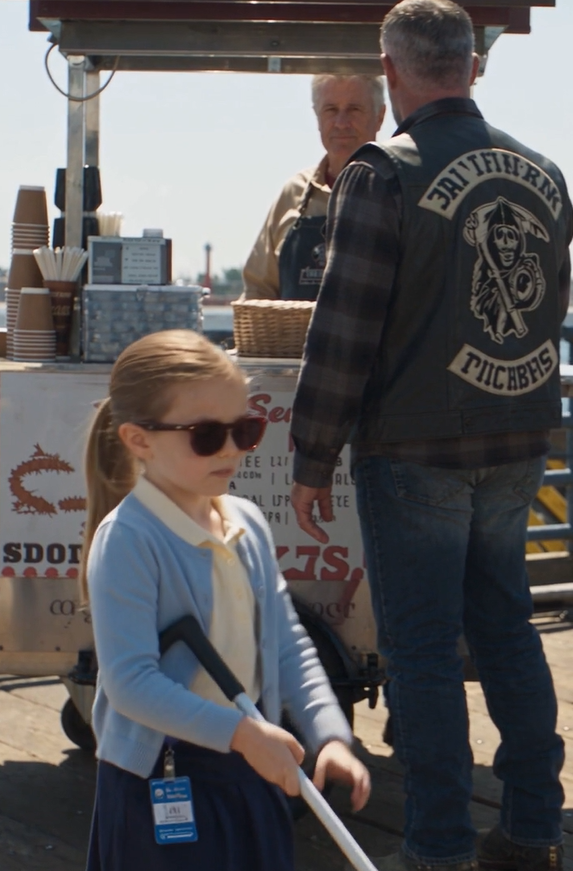
The Blessing of the Fleet family day had filled the wooden pier before noon. Children leaned over railings to watch gulls. Vendors called out prices for lobster rolls and lemonade. A ferry horn sounded every few minutes from the dock, low and heavy, rolling over the water and bouncing back from the bait shops.
Near the harbor fence, a row of motorcycles sat in the sun, chrome flashing hard enough to make people squint. Martin Harbor Keen stood beside them with a coffee in one hand and a donation bucket for coastal veterans on the table behind him. He was fifty-four, broad through the shoulders with a gray beard, worn boots, and a Hells Angels vest that made some parents steer their children to the other side of the walkway. Martin was used to that.
He did not chase approval. He had come to help raise money, drink bad coffee, and leave before the speeches started. A few feet away, Orin Fletcher had a booth full of handmade wooden boats: little schooners, tugboats, a painted ferry with tiny windows. He had arranged them on a blue cloth like museum pieces.
Then the real ferry horn blasted. Loud, close. A little girl walking along the boards flinched at the sound. She was small, maybe nine, with a white cane in her right hand and a blue plastic tag hanging against her shirt. The red roller tip of her cane caught in a crack between two planks. Her body turned before she could correct it.
She bumped into Martin's side, light as a bird hitting a window, and his coffee sloshed over his fingers. At the same time, one of Orin's wooden boats slid from the edge of the table and dropped onto the mat below. It did not break, but everyone heard it land. Heads turned. A woman stopped mid-sentence. A boy with a snow cone stared.
Orin stepped forward fast, his mouth already tight. The girl lowered her chin. Her left hand searched the air once, then found the strap of the blue tag on her chest.
"Sorry," she said. Her voice was clear, but small. "I can't see."
Martin looked down at her cane before he looked at the spilled coffee. The red roller tip was split on one side, bent just enough to catch again if she moved too fast. The girl stood very still, like she had learned not to make sudden movements when adults sounded upset.