The first person to welcome me to Bittern Ridge did it with her middle finger, and she held it up long enough that I had time to notice her manicure.
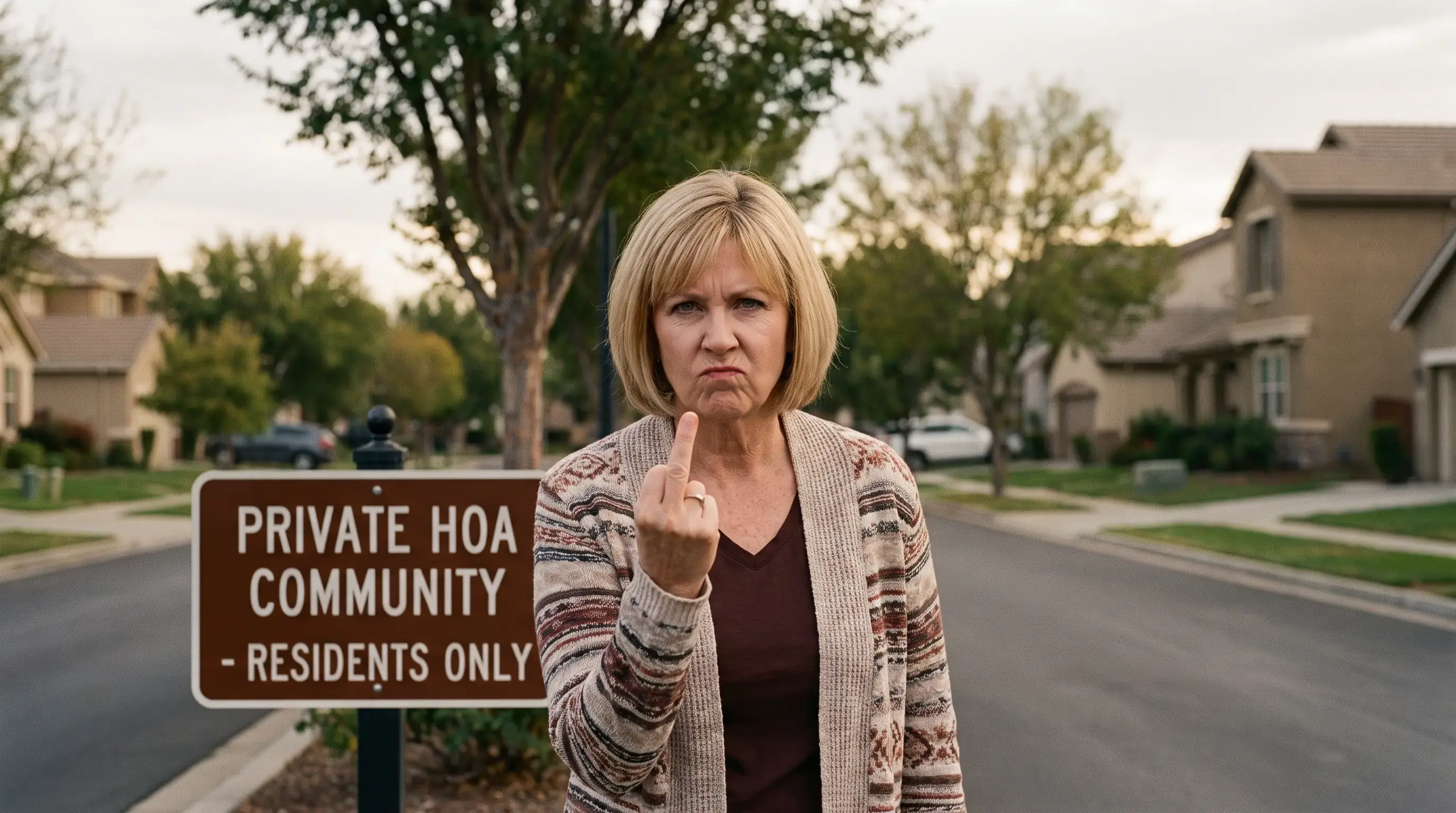
It was a Saturday in late August, a little after nine at night, and the heat in Fernhill, North Carolina, had not gotten the message that the sun was down. I was standing in my new driveway in my late husband's flannel shirt with the sleeves cut off, a pair of paint-spattered jeans, and a Hampton University ball cap that had been through two washing machines and one hurricane. My nephew Jerome and two of his friends from the community college were carrying my father's recliner up the ramp of a rented box truck backward, because they had loaded it last and needed it first, and I was holding a flashlight on the ramp so nobody broke an ankle.
Behind the box truck sat my own truck, a 1996 Ford F-250, green once, mostly primer now, with a dent in the tailgate shaped exactly like a fence post I'd backed into in 2009. I loved that truck the way you love a dog that bites the mailman. My husband Lorenzo had called it the Diplomat, because it never started an argument but it never lost one either.
The woman came up the sidewalk out of the dark at a fast walk, the kind of walk people take for their health and use for surveillance. She was in her early sixties, lean, in white athletic capris and a lavender visor, with a phone in one hand and a small flashlight clipped to her waistband. She stopped at the property line as precisely as if somebody had painted it on the concrete.
"Excuse me," she said. "Who's in charge here?"
I lowered the flashlight so it wasn't in her eyes. "Evening. I suppose I am."
She looked at me, then at the truck, then at Jerome, who was six foot four and wearing a tank top that said FERNHILL TECH WRESTLING, then at the other two boys, then back at me. I watched her do the math. I have watched people do that math my entire life. It's quick, and it's never as private as they think.
"Is the owner here?" she said.
"I'm the owner."
"Of the moving company."
"Of the house," I said. "Beatrix Quarterman. Most folks call me Bea. We closed Thursday."
There was a pause about the length of a held breath. "I see," she said, in a tone that suggested she didn't, and that she intended to look into it. "Well. I'm Marcella Vasbinder. I'm president of the Bittern Ridge Homeowners Association. I assume you received a copy of the covenants at closing."
"I did. Forty-four pages. I've read about half."
"Then you haven't gotten to Article Seven, Section Three." She pointed her phone at the Diplomat like it was a dog that had gotten into her trash. "Commercial vehicles, trucks exceeding three-quarter-ton capacity, and vehicles in visible disrepair may not be parked in driveways overnight. And moving vehicles must be off the premises by eight p.m. It's nine-fourteen."
Jerome set his end of the recliner down. I gave him a look that meant keep carrying, and he picked it back up.
"Ma'am," I said, "I appreciate you letting me know. We've got maybe forty minutes left. My father's eighty-one and he's staying at a motel out by the interstate tonight because his bed is in this truck. I'd like him to sleep in his own bed tomorrow. The rental's due back at seven a.m. I'll have it gone by then, and I'll find somewhere to keep my pickup by Monday."
"The covenant doesn't say Monday."
"No, ma'am, it doesn't."
"So you'll move it."
"Tonight, I won't," I said. "Not unless you want to help us carry a dresser."
I said it with a smile. I'd like that on the record. I had been awake since four, I had driven three hundred and ten miles from Richmond with my father in the passenger seat asking me every forty minutes whether we'd remembered to stop the newspaper, and I still said it with a smile.
Marcella Vasbinder did not smile back. She raised her phone and took a picture of the Diplomat, then of the box truck, then, after a small hesitation that I don't think she'd be proud of now, of Jerome. The flash went off in his face. He blinked and kept walking.
"You'll be hearing from the board," she said.
"I look forward to it."
That was when she did it. She turned to go, looked back over her shoulder, and lifted her right hand, and there it was, slim and pale and very deliberate, a coral-pink nail at the end of it, catching the light from my flashlight. She held it for maybe two full seconds. Then she walked off up Plover Lane, her flashlight bobbing, and turned in at the big gray house on the corner with the black shutters and the flag that hung exactly straight even though there was no wind.
One of Jerome's friends, a soft-spoken kid named Tou who I later learned lived two streets over with his grandmother, said, very quietly, "Oh, that's Mrs. V. Everybody calls her the Karen of Bittern Ridge. Not to her face."
"Somebody ought to," Jerome said.
"Nobody ought to," I said. "Get the dresser."
I want to explain why I didn't say more, because I've thought about it a great deal since, and because a lot of people later assumed I was playing some kind of game, letting her dig. I wasn't. The truth is simpler and a little less flattering. I was tired. I was fifty-four years old and I had spent the last twenty-nine of them as a police officer, the last eleven in Richmond's Office of Professional Standards, which is a polite name for the unit that investigates other cops. I had sat across tables from men who'd lied under oath, women who'd stolen from evidence, sergeants who'd decided which neighborhoods got patrolled like they were choosing which rooms of a house to clean. I had been called every name there is by people who wore the same badge I did. A woman in a visor flipping me off over a pickup truck did not register very high on the scale.
And there was a second reason. On Thursday afternoon, three hours after I signed the closing papers, I had signed another set of papers in the office of the city manager of Fernhill, accepting appointment as the city's next Chief of Police, effective upon swearing-in at the regular city council meeting on September fifteenth. The city hadn't announced it yet. The search had been contentious, the outgoing chief was popular in some quarters, and his deputy, a man named Garrett Kessling, had wanted the job badly and been told he wouldn't get it. The city manager wanted to announce me at the meeting, with the council present, so that the news came out all at once and not in pieces. I had agreed to keep my mouth shut until then.
So that night I was nobody. I was a widow in a cut-off flannel shirt with an old truck and a houseful of boxes, and for three weeks I would get to find out what that was like in Bittern Ridge. I'll be honest: some part of me was curious. You learn things about a place when nobody thinks you matter.
We finished at ten-oh-five. I tipped the boys more than I could afford, sent Jerome back to his apartment with a cooler of leftover sandwiches, and sat down on the front step with a warm ginger ale. The house was a brick ranch with a low roof and a deep front porch, built in 1988 when Bittern Ridge was the only subdivision on this side of Fernhill, back when, according to the listing, you could see the river from the end of Plover Lane. It had been renovated inside by the seller, an outfit called Tidewater Home Solutions, LLC, in the way flippers renovate: gray vinyl plank floors, white shaker cabinets, a light fixture in the dining room that looked like a cluster of glass bubbles. But they'd left the porch alone. It had a beadboard ceiling painted haint blue, the old Southern color that's supposed to keep spirits from crossing the threshold, and there were hooks in the ceiling where a swing had hung.
It was the porch that sold me. That, and the bedroom at the back of the house that opened onto the yard with no steps, so my father could get in and out with his walker, and the price, which was lower than anything comparable within fifteen miles. I'd wondered about the price. I'm a suspicious person by training. But the inspection came back clean, and the title was clear, and Tidewater's agent, a pleasant woman named Tamara who smelled like expensive hand lotion, had said the previous owner was an elderly gentleman who "had to go into care," and that the family wanted a quick sale. That happens. People get old. Houses outlive them.
I finished the ginger ale and looked up at the haint-blue ceiling and thought about Lorenzo, who would have loved that ceiling, and who would have said something about Marcella Vasbinder that would have made me laugh so hard I spilled the ginger ale. He'd been gone three years in October. Pancreatic cancer, eleven weeks from diagnosis to the end. He taught high school band in Richmond for twenty-six years, and at his funeral four hundred people showed up, and a drumline of his former students played him out of the church, and I stood there in a black dress and thought, I have spent my whole life investigating what people do wrong, and I married the one man in Virginia who only ever saw what they did right.
He was the reason I took the job in Fernhill, in a roundabout way. He grew up here. His mother's people are buried in the cemetery behind Mount Gilead AME on Tanner Road. When he was sick, he'd talk about Fernhill the way people talk about a place they've only half-left: the river, the peach stand on Route 9, the Fourth of July fireworks off the old textile mill. "You'd like it," he told me once, near the end. "It's small enough that you could actually fix something." When the posting for police chief came across my desk, from a recruiter who'd gotten my name from somebody who'd gotten it from somebody, I almost threw it away. Then I saw the town's name and sat there for a long time.
The other reason was my father. Obadiah Batts was a letter carrier for the Postal Service for thirty-eight years, and for most of them he could tell you the name of every dog on his route and which ones would bite. Two years ago he started forgetting the names of people instead. Now it came and went. Some days he was entirely himself, sharp and funny and full of opinions about baseball. Some evenings, as the light went, he got confused, and he'd want to go home, by which he meant a house in Petersburg that was torn down in 1991. My brother lives in Germany with the Army. There was nobody else. I needed a smaller job, with steadier hours, in a smaller place, and a house where he could sit on a porch.